

“Do you remember the story of the rose tea set?” I asked my niece as I opened the sage green lid of the clear plastic tote. She didn’t know the story, so I talked while sorting through the packed dishes. So many memories drifted back as I unwrapped tea pots, cups, saucers, and snack plates — all in the vintage Japanese moss rose pattern.
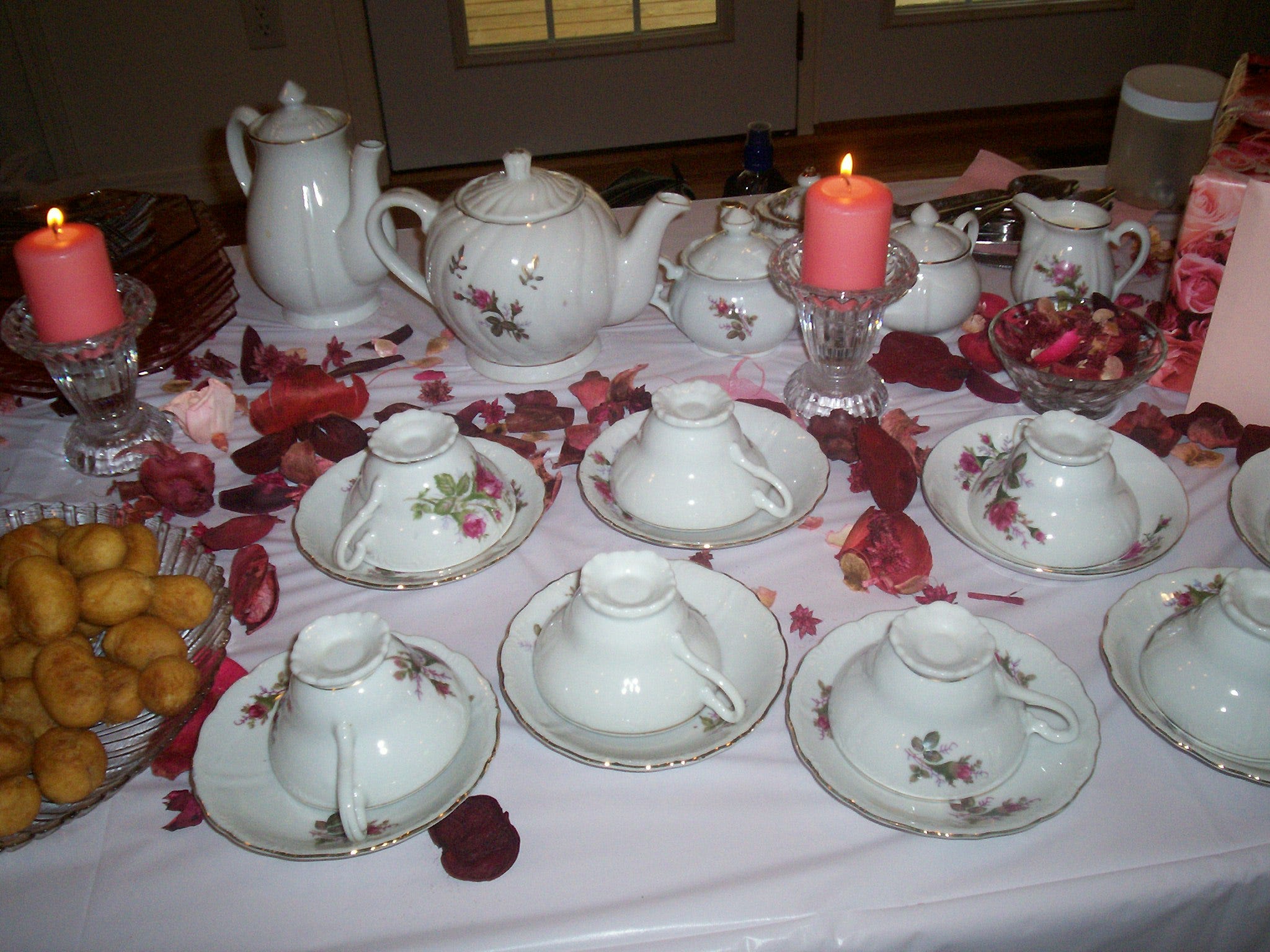
Like many family stories, the origin of the tea set is somewhat fuzzy in my mind, but several facts remain. When she was in highschool (sometime in the late 1950s), my maternal grandmother used to visit an elderly lady once a week to do her hair. I don’t remember how she knew the lady or what her name was, but Memaw would go over to her house to wash and curl her hair. At one point, the lady gave Memaw a tea set as a thank-you gift. This, I explained to my niece, was the original rose tea set.
Years later, Memaw’s friend Marie gave a child’s version of the moss rose tea set to my mom. We assume the set had belonged to Marie’s daughters when they were younger. My mom grew up having tea parties with both the child’s and later the full-sized set.
When my mom grew up, Memaw gave her the rose tea set, and my mom had it displayed in a hutch as a newlywed. When my dad’s grandmother was visiting one day, she saw it — and decided to give my mom the tea dishes she had collected in the same pattern.
By the time I was a girl, the rose tea set had grown to several tea pots, lots of cups, saucers, plates, and miscellaneous items. My sisters and I loved having tea parties with the rose tea set — and of course, we always invited our brothers. My mom generously let us use the dishes fairly often once I was old enough to be responsible with them.

These days, the set is much smaller — no doubt due to chipped items we didn’t bring with us on various family moves. Still, it was nostalgic seeing various pieces and reminiscing with my nieces yesterday as we unpacked a couple pots, the seven remaining good cups, saucers, and some snack plates. We were having a little tea party, in honor of the feast day for the Queenship of the Blessed Virgin Mary. My nieces have been wanting to have a tea party since helping us repack the set last fall — and to be honest, we aunties have been wanting an excuse as well. When our mom read in Kendra Tierney’s The Catholic All Year Compendium that some people have tea parties to honor the Queen of Heaven, she suggested we take a break from routine to make it happen.
The cooler rainy Saturday was perfect for extra cooking inside. Grace made some traditional British Queen cakes — which were rather like tiny sweet biscuits or scones. These are traditional for the feast day.
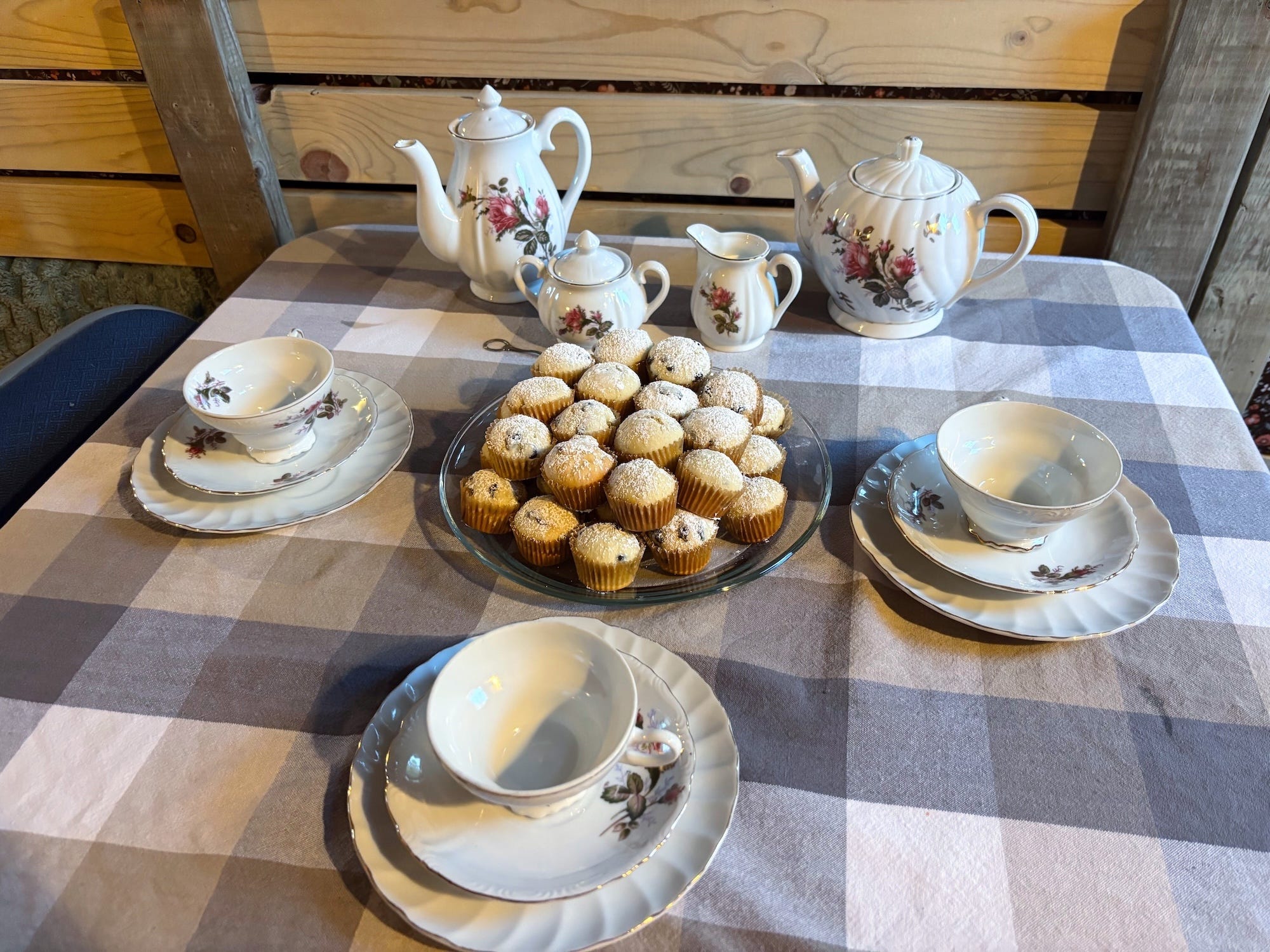
We also whipped up some mini quiches, Scotch eggs, cucumber sandwiches, and egg salad sandwiches. It ended up being a rather long day, as we still had to do a little morning gardening and our pre-Sunday cooking.


It was a fitting celebration to a long week. Every day has been a repeated cycle of gardening, deep cleaning, food preservation, and cooking. Our newest niece came home with her mother on Monday, so the days have been peppered with baby snuggles as we could fit them in. On Thursday, Grace and I made our first ever attempt at some fall crops — planting various varieties of lettuces, mustards, radishes, carrots, kohlrabi, and bush beans. We had empty garden space where our potatoes, onions, and lettuce used to be, and it seemed a shame to let the ground go to waste. We’ve still been harvesting beans, squash, cucumbers, and tomatoes daily. We’ve gotten a few melons, but most have been eaten by voles before we get the chance.


When we all finally sat down to tea last night, we felt all our efforts were worth it. Only our oldest niece could remember using the tea set before, and both girls beamed as they poured cup after cup of Earl Grey. Even our nephew was impressed with the tea party, as he has been reading C.S. Lewis’ Narnia books and the characters frequently “sit down to tea,” he said. As we sipped and snacked, we reminisced about tea parties gone by — both fancy ones with the rose tea set and casual ones with every day dishes. We talked about Memaw and how much she would have loved the whole event. There is something in rituals that draw us back into our memories, bringing the past close with the present. As I wrapped the dishes back up at the end of the evening, I thought about how many tea parties are yet to be enjoyed by this new generation in our family. I showed my nieces the child’s cups we still have, saying how we always let the little kids use those. They smiled, and we said it wouldn’t be too many years until the new baby can join the fun.

We all agreed a Queen’s tea party should be a yearly tradition, and I couldn’t help reflecting on the particularly feminine quality of our enacted ritual. It brought generations of women together, even though some will never know each other. Thinking about Mary as the Queen of Heaven has been a shift for a lifelong Protestant, but I can appreciate what the elevation does for femininity — as Mary models the dignity of womanhood as it was meant to be. There is something about holding a china cup or pouring tea that makes us all sit up a bit straighter in our chairs. Our movements become more gentle, our voices softer, and our words a bit more polite.
In the Narnia series, Lewis often referred to his female characters as “daughters of Eve.” This identity has always resonated with me, as someone who was especially close to my matrilineal ancestors. It is profoundly human to identify with Eve’s story — the earthiness of her temptation and fall. As Christians, though, in a very real way, we are also daughters of Mary (John 19:26-27). As creatures being sanctified, there is something especially elevating in meditating on the ways Mary’s obedience signified the redemption of womankind. I can’t help thinking that sitting down to a tea party might just be the perfect reminder that we are all daughters of a Queen.